Capture a source, not a conclusion
Record the original FDA identifier and URL, the named company, the product code, the applicable source date, and the date you accessed it. Preserve the factual excerpt that prompted the research question. An alert or a secondhand summary is a useful starting point, but it should not replace the underlying record.
MedTech Watch, also built at Dyno, provides public FDA research and optional private monitoring. Its sources, company-name scope, and date definitions should travel with any finding you bring into a product discussion. It is competitive intelligence, not validated postmarket surveillance.
Keep the observation separate from the proposed change
A source can tell you that a record exists and what it says. It cannot establish your intended use, prove that your design has the same risk, or approve a new requirement. Write the team's observation in a separate field, with assumptions and unresolved questions visible.
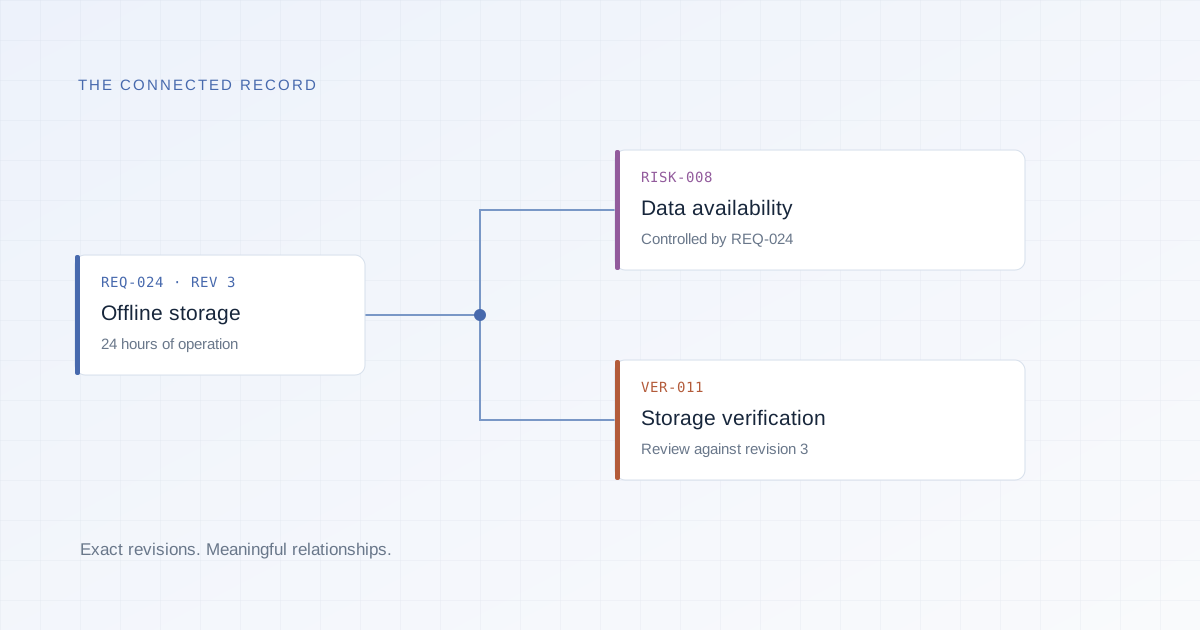
Assign an owner to assess relevance. Link the assessment to the exact requirement, risk record, or investigation revision involved. If the team concludes that no action is needed, retain the rationale instead of quietly discarding the finding.
A worked example: a new question about an existing requirement
This example is illustrative and is not an actual FDA report or a regulatory recommendation. A team sees a public record describing a device interruption. Its own product has an offline-storage requirement. The public record prompts a question; it does not demonstrate a failure in the team's product.
| Record | What to retain | Decision boundary |
|---|---|---|
| Source note | FDA identifier, URL, exact excerpt, dates | What the public record says |
| Team assessment | Relevant intended use, assumptions, unresolved questions | Whether the finding applies |
| Requirement revision | Existing revision and proposed change | What the team chooses to change |
| Verification work | Protocol, evidence, affected links | What supports the revised requirement |
| Review outcome | Owner, rationale, date, next action | Accountable team decision |
Carry the source through changes and review
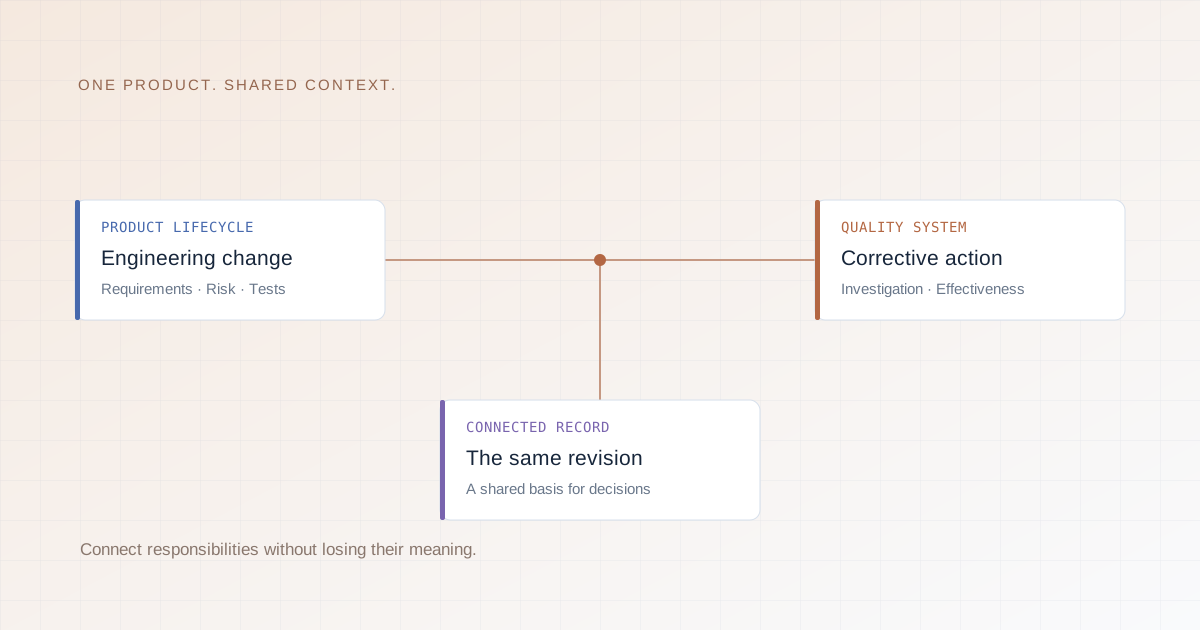
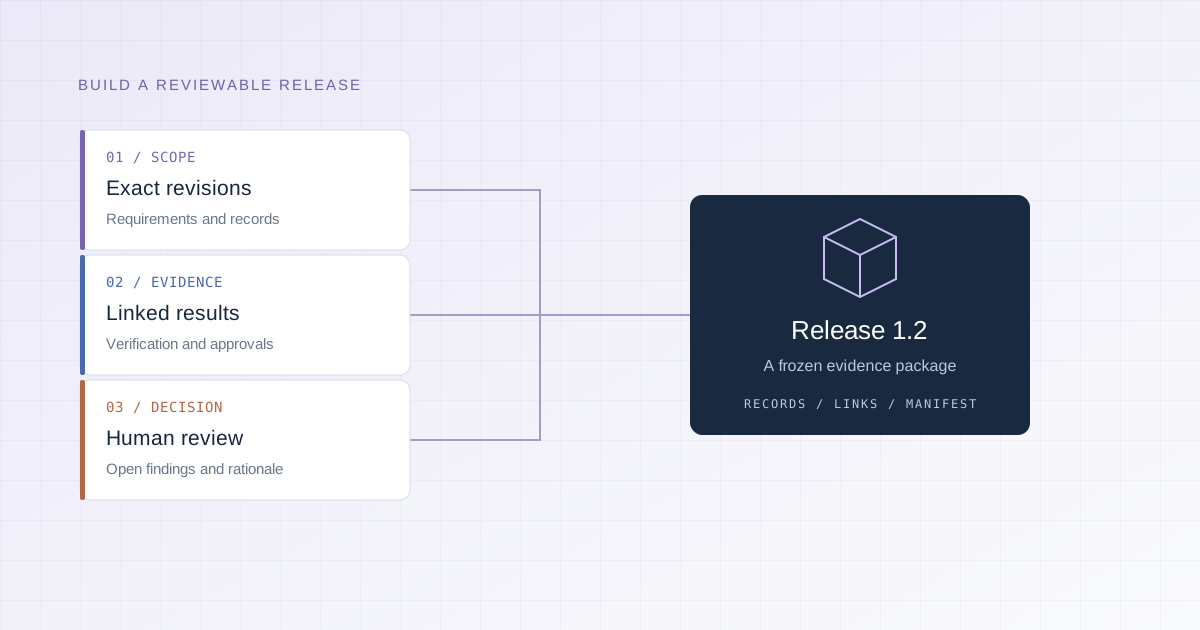
A finding may prompt no change, more research, or a formal change under the team's procedures. If it changes a requirement, preserve the previous revision and assess linked risks, verification, and release evidence. An older test result does not automatically support a changed requirement.
Keep the research note linked to the assessment so a later reviewer can distinguish the outside observation from the team's judgment. Do not treat the existence of a linked record as evidence that the decision is adequate.
Evaluate the workflow in Benchform
Benchform is being developed to connect requirements, risk, traceability, and release evidence. It is available for early-access evaluation; customer qualification and approval for official quality use remain pending. There is no automatic transfer of MedTech Watch accounts, private watchlists, or records into Benchform.
Use the blank research-note worksheet to bring a concrete example to an evaluation. The team should still define its review responsibilities, applicable procedures, and evidence requirements.
Sources and further reading
Download the blank research note
CSV · blank worksheet from MedTech Watch
Put the workflow in context
Traceability & change in Benchform
Follow the connections between requirements, risk, verification, and releases. Find the gaps and identify which decisions need another look.
Explore traceability & change